PROPAGATED IN AUSTRALIA
What is Miscanthus x giganteus?
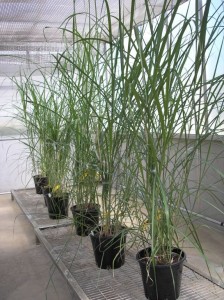
Miscanthus x giganteus (MXG) is a large perennial grass that was formerly considered a weed, but is now attracting attention as one of the most productive and potentially ideal biofuel and bioenergy crop, due to its active assimilation of carbon dioxide, efficient biomass production and low micro-element content when burned to ash.
MXG provides excellent raw material and fuel to the heat and energy industries (1 acre of MXG can produce the equivalent energy of 35 barrels of crude oil and an average of 10-25 tons of dry biomass per year). The high-quality biomass can be diverted towards production of methane and ethanol, or towards the construction and paper industries.
What’s more, being a natural, perennial, robust grass, MXG requires very little maintenance, has low requirements for water, fertilisers and pesticides, and is an environment-friendly, renewable energy source as it helps reduce atmospheric CO2. It can be harvested at any time of the year, and is easy to store.
Needless to say, the market demand for MXG is rapidly increasing, the world over.
Why Miscanthus Tissue Culture?
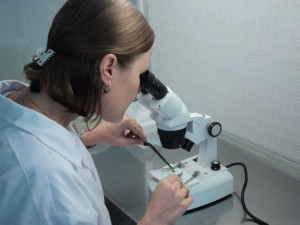
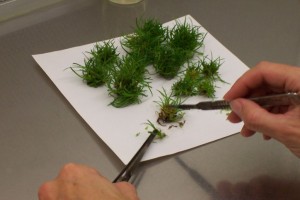
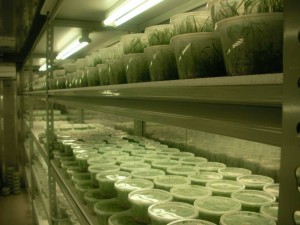
MXG is a sterile triploid (three sets of chromosomes) naturally produced by a cross of MXG sacchariflorus and MXG sinesis. It therefore, cannot produce viable seeds, and propagates by rhizome division. If undertaken for mass plantation, rhizome division can be extremely labour intensive, and has an unpredictable output. Plant tissue culture has the potential to propagate MXG in vitro and in large quantities, while maintaining the original plant characteristics.
While various countries around the world have joined the MXG revolution and are at various stages and scales of production, Australia has been lagging behind as the plant has not been available within the country. Importing rhizomes, plants or even
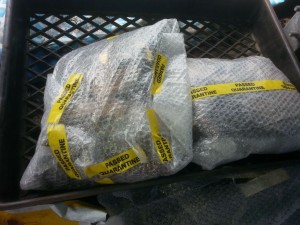
tissue culture plants, requires imported product to pass through a rigorous quarantine process with DAFF, which can often take a
couple of years, during which the mortality of the material being tested is usually high.
Moreover, any bulk import of any product will incur proportionally high quarantine costs (more plants = more fees). Imported tissue culture plants have to be de-flasked in quarantine and grown into proper plants for testing. Besides, sourcing tissue culture plants has challenges of its own, as International suppliers tend to have established distribution channels that are vertically integrated.
But now…
Recognising the challenges associated with importing source material, Plant Biotech has successfully imported high quality MXG clones, via the long and complicated quarantine process.
These plants have recently been fully cleared and released to our laboratory after being subjected to a very long period of post entry quarantine procedures. We are now in the final stages of initiating these back into tissue culture.
Once these protocols are established, we will be cleared to mass-produce plants, as our source stock has been 100% certified as pest-free.
This is a first for Australia.
We are now able to accept orders, and will begin testing interest within the domestic market. (Tissue culture stock could also be further exported of course.)
Plants will be supplied as plugs. Contact us for more details.